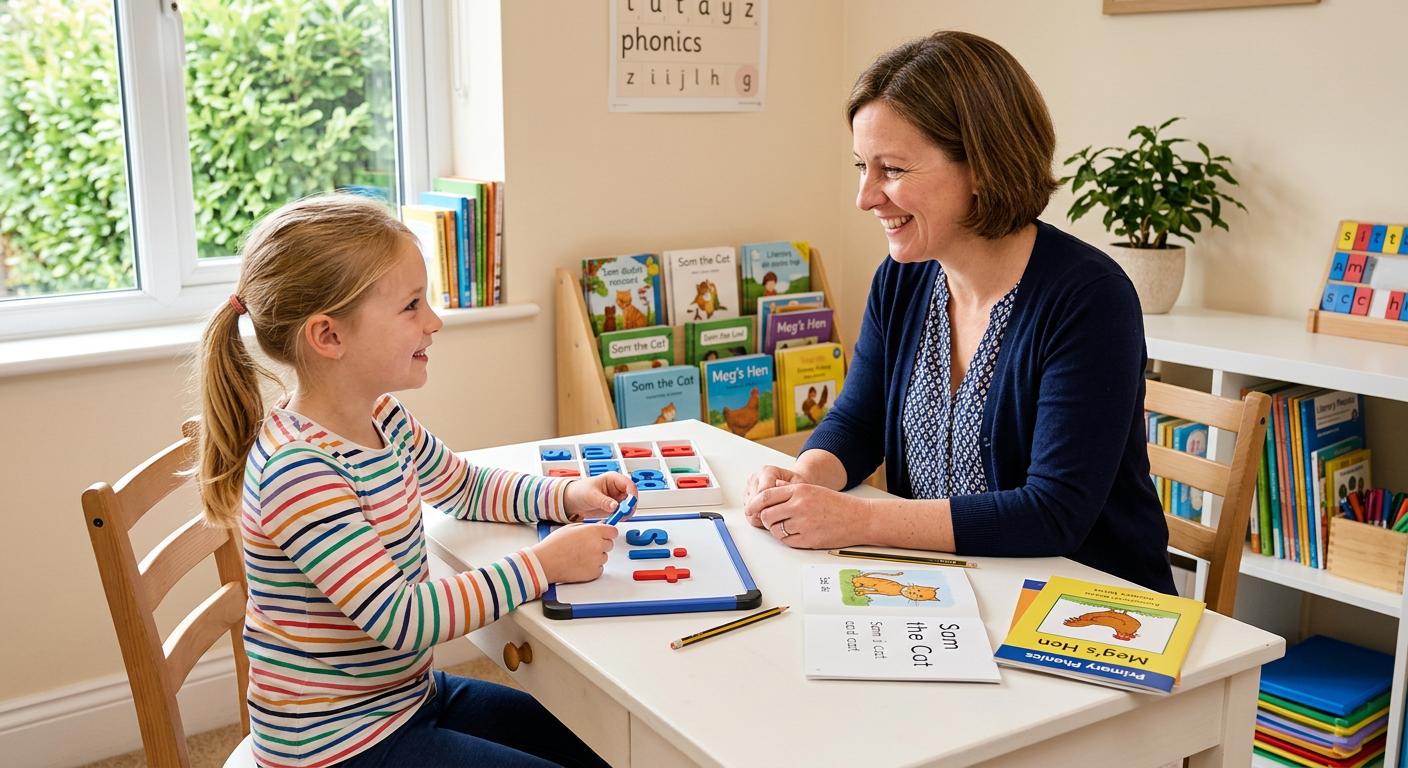
If your child has dyslexia or struggles with reading, you may have heard the term Structured Literacy.
But what exactly does it mean, and why is it so often discussed in connection with dyslexia?
Structured Literacy is an approach to reading instruction that teaches important language and reading skills in an explicit, systematic, and carefully organized way. For children who struggle to learn to read, this type of instruction can provide the structure and repetition they need to build stronger reading skills.
What Does Structured Literacy Teach?
Structured Literacy focuses on several important areas of reading and language development:
- Phonemic awareness: Recognizing and working with individual sounds in spoken words.
- Phonics: Understanding the relationship between letters and sounds.
- Syllables: Learning how words can be divided into smaller units.
- Spelling: Understanding patterns that help explain how words are written.
- Morphology: Learning meaningful parts of words, such as prefixes, suffixes, and roots.
- Syntax: Understanding how words are organized into sentences.
- Semantics: Understanding the meaning of words and sentences.
Rather than expecting children to discover these patterns on their own, Structured Literacy teaches them directly.
What Does “Explicit and Systematic” Mean?
Explicit instruction means the teacher clearly explains and demonstrates a skill instead of expecting the student to figure it out independently.
Systematic instruction means skills are taught in a planned sequence. Students typically begin with foundational concepts and gradually move toward more complex ones. Previously learned skills are also reviewed and practiced as new concepts are introduced.
For a child who finds reading difficult, this predictable structure can make learning more manageable.
Why Is Structured Literacy Important for Dyslexia?
Children with dyslexia often have difficulty with skills involved in decoding words—particularly connecting written letters with the sounds of spoken language.
A child might see an unfamiliar word and guess what it says rather than being able to confidently break the word into sounds. Structured Literacy aims to teach those underlying skills directly.
Instead of relying primarily on memorizing words or using pictures and context to guess unfamiliar words, children learn strategies for understanding how words actually work. Over time, these skills can help students become more accurate and confident readers.
Is Structured Literacy the Same as Orton-Gillingham?
Parents researching dyslexia intervention frequently encounter both terms. They are related, but they aren't exactly the same thing.
Structured Literacy describes a broader approach to reading instruction. Orton-Gillingham is one well-known instructional approach that incorporates many principles associated with Structured Literacy.
You may also encounter dyslexia specialists trained in other programs or approaches that use explicit and systematic instruction. Rather than focusing only on the name of a particular program, parents should also understand how the specialist teaches and what training they have received.
What Should Parents Look for in a Dyslexia Specialist?
When speaking with a potential specialist, don't be afraid to ask questions:
- What training or certifications do you have?
- What approach do you use for dyslexia intervention?
- Is your instruction explicit and systematic?
- How do you determine where my child should begin?
- How do you monitor progress?
- How often do you recommend sessions?
A qualified specialist should be comfortable explaining their approach in language parents can understand.
How Often Does a Child Need Dyslexia Intervention?
There isn't one schedule that's appropriate for every child. The frequency and duration of intervention can depend on the child's age, current reading skills, specific areas of difficulty, and the instructional approach being used.
Consistency is important. Parents should discuss recommended frequency with the professional working with their child and understand how progress will be monitored over time.
Finding the Right Support for Your Child
Learning about Structured Literacy can feel complicated at first, but parents don't need to become reading specialists themselves. What matters is understanding some of the fundamentals so you can ask better questions and make informed decisions about your child's support.
At Neuroly, families can browse experienced dyslexia specialists who provide personalized, one-on-one online intervention. You can compare specialists based on their experience, credentials, approach, availability, and rates to find someone who may be a good fit for your child.
Frequently Asked Questions
Is Structured Literacy only for children with dyslexia?
No. The principles of Structured Literacy can support many students learning to read, although this type of explicit and systematic instruction is particularly important for students who experience reading difficulties.
Can Structured Literacy be taught online?
Yes. Structured Literacy instruction can be delivered online when sessions are appropriately designed and led by a trained professional.
How do I know if a tutor uses Structured Literacy?
Ask directly about their training, certifications, instructional approach, and how sessions are structured. A qualified professional should be able to clearly explain how they teach reading.
Does my child need a dyslexia diagnosis before receiving reading support?
Not necessarily. A child experiencing persistent reading difficulties may benefit from appropriate reading support even while a family is exploring screening or evaluation options.
Ready to take the next step?
Compare experienced dyslexia specialists on Neuroly and find the right support for your child.
Get Started with Neuroly